
Courtney Johnson is a graduating senior at Savannah State University. Her passions include the fields of Communication and English. As an intern on the APA Style team in fall 2025, she contributed to instructional aids and the APA Style Monthly newsletter, wrote a post for this blog, and wrote an APA Style sample paper in the style of a journalism class assignment. Her educational and professional interests surround editing and public relations. In her free time, she enjoys reading, listening to music, going to concerts, and learning new things.
Johnson, C. (2025, December 10). Real or fake? What students should know about predatory journals and journal hijacking. APA Style. https://apastyle.apa.org/blog/predatory-journals
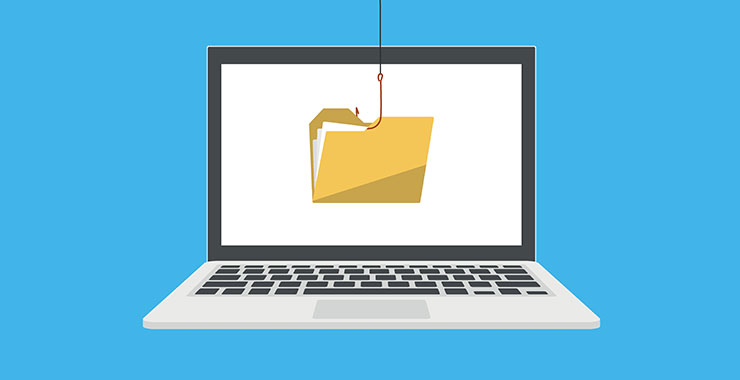
When you’re working on a research project and reading scientific articles online, it’s easy to assume that the information you’re reviewing is trustworthy.
But not every article that looks official actually is. Two recent pieces highlight a growing problem in the world of publishing research:
- APA Journals warned readers about journal hijacking (APA, n.d.), along with a rise in predatory journals that look legitimate but are not.
- Another article, from The Journalist’s Resourceopens in new window (Miller, 2025), shared a surprising finding: Even professional science and health reporters sometimes struggle to tell which journals are trustworthy and which ones are fake.
If trained journalists can get fooled, it’s easy to see how students and researchers can, too. That’s why learning how to spot unreliable sources now can help you avoid mistakes in school or other research projects.
What is a predatory journal, and what is journal hijacking?
Breaking it down:
- Predatory journals, also called deceptive journals, are publications that look like real academic journals but skip or fumble important editorial steps like rigorous peer review. Their main goal is often money, not integrity.
- Journal hijacking occurs when a fraudulent website impersonates a legitimate academic journal (or creates a very similar name), lures authors to submit their manuscripts, and charges fees. It’s a trick to exploit trust.
Because these journals can publish low-quality or even false research, relying on them can undermine your work as a student, researcher, or reader. Authors should always verify the legitimacy of a journal and/or website before submitting their research, to ensure the credibility and integrity of their work. Here are some things that experienced researchers look out for when evaluating potential sources that might publish their manuscripts. You may also find these on the websites of predatory journals:
- Fake calls for papers, which are announcements that invite researchers to submit their work for possible publication. A fake “call” may include misspelled text, vague descriptions, small fees, and so on.
- Journal names that are copies of real journal names.
- Offers of super-fast publication for a fee.
How you can avoid citing articles from predatory journals
Here are some steps to take to avoid accidentally citing predatory journals in your own paper:
- Use a reputable database to conduct your research. You likely have access to many such research databases via your institution’s library. The publishers of those research databases have already made decisions about what materials to include in the database based on a variety of factors, including the legitimacy and the publication ethics of the publishers. Database publishers are also likely to be transparent about their selection criteria (e.g., one can browse the APA PsycInfo database selection criteria).
- Check out a journal’s name and website carefully, particularly if you’ve found the site via an internet search, outside of a database. Does the site look professional? Are there typos, odd layouts, or vague information? Does the site look reputable?
- Look for a peer review description: Do they clearly explain the review process?
- Research the publisher. Who is responsible for producing the journal? Do they have a strong, trustworthy reputation in academic publishing? A reference librarian at your institution’s library can likely help you find resources to make these determinations.
- Verify author credentials. You can search reputable databases to see if the same authors have published other works on similar topics. You can also check university websites to verify the information found in an article’s byline. When an author has included their ORCID iD in the author’s note, you can also verify that author’s other publications by copying and pasting the number into the search bar on the ORCID iD websiteopens in new window.
Why it matters and how APA Style fits in
If you cite an article from a predatory journal in a research paper, you could end up sharing false or unreliable information. This can weaken your argument, even if your paper is strong overall. The same thing happens when you read a scientific or other scholarly article online that’s based on flawed research. The misinformation spreads quickly, and it can be hard to tell what is truly accurate.
APA Style is not just about reference format; it’s also about research integrity. APA (2020) expects journal editorial offices and publishers to be thorough “in evaluating the articles they publish” (noted in the seventh edition Publication Manual Section 12.4, where you can find additional information about avoiding predatory journals). This means using trustworthy journals that are transparent about their review processes, editorial boards, and publication fees, and that are indexed in reputable databases like APA PsycInfo. Other reputable tools recommended in Section 12.4 include the Think. Check. Submit.opens in new window website and the Directory of Open Access Journals (DOAJ)opens in new window.
Students, by following this guidance, you can ensure that the sources you are citing are credible and peer-reviewed. Taking the time to research and evaluate your sources protects the integrity of your own research.
References
American Psychological Association. (n.d.). Are you submitting to an authentic scholarly journal? https://www.apa.org/pubs/journals/resources/publishing-tips/journal-hijacking-predatory
American Psychological Association. (2020). Publication manual of the American Psychological Association (7th ed.). https://doi.org/10.1037/0000165-000
Miller, N. S. (2025, September 30). Study sheds light on journalists’ knowledge of predatory journals. The Journalist’s Resource. https://journalistsresource.org/home/study-sheds-light-on-journalists-knowledge-of-predatory-journals/opens in new window

Comments are disabled due to your privacy settings. To re-enable, please adjust your cookie preferences.